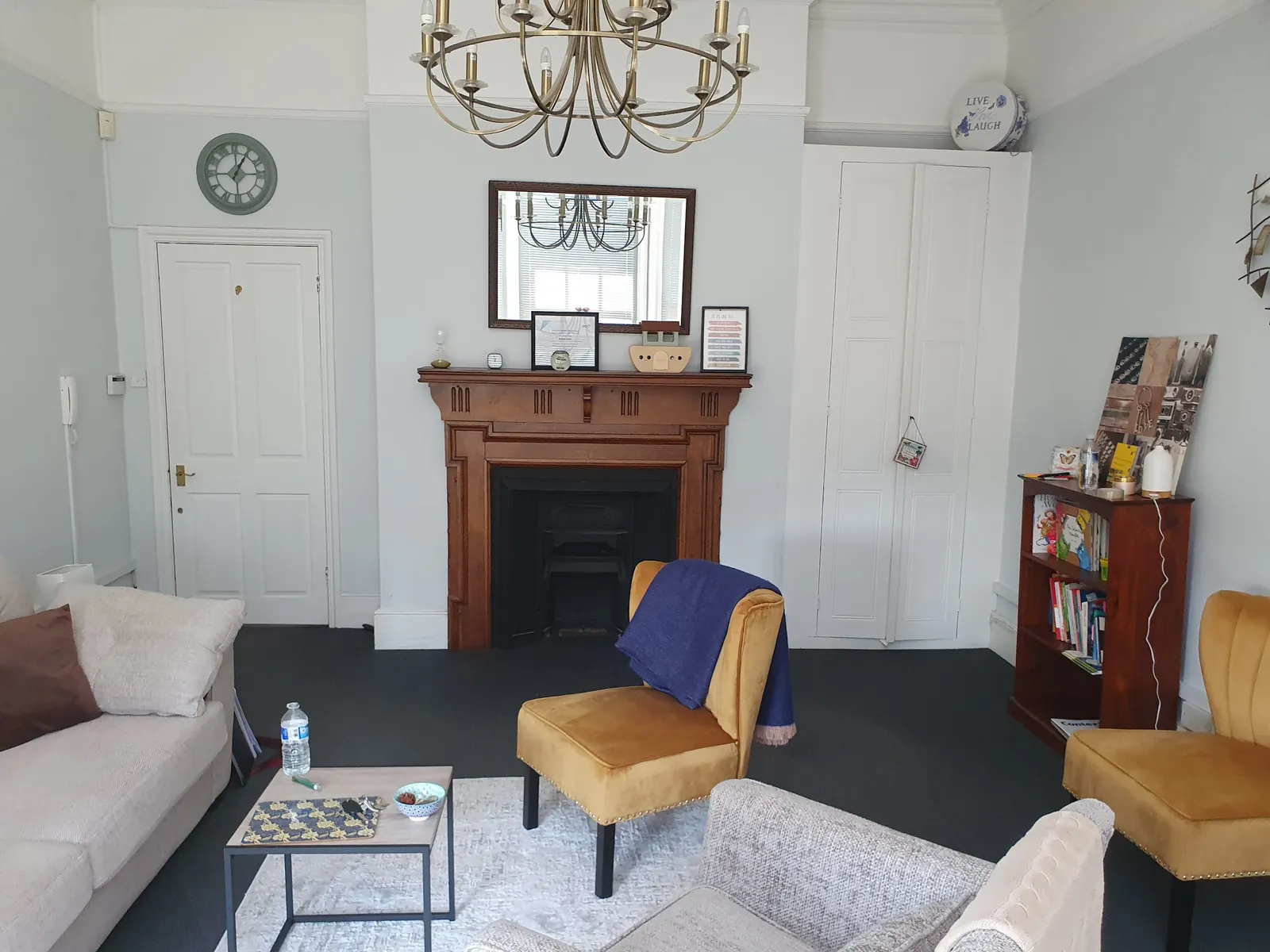
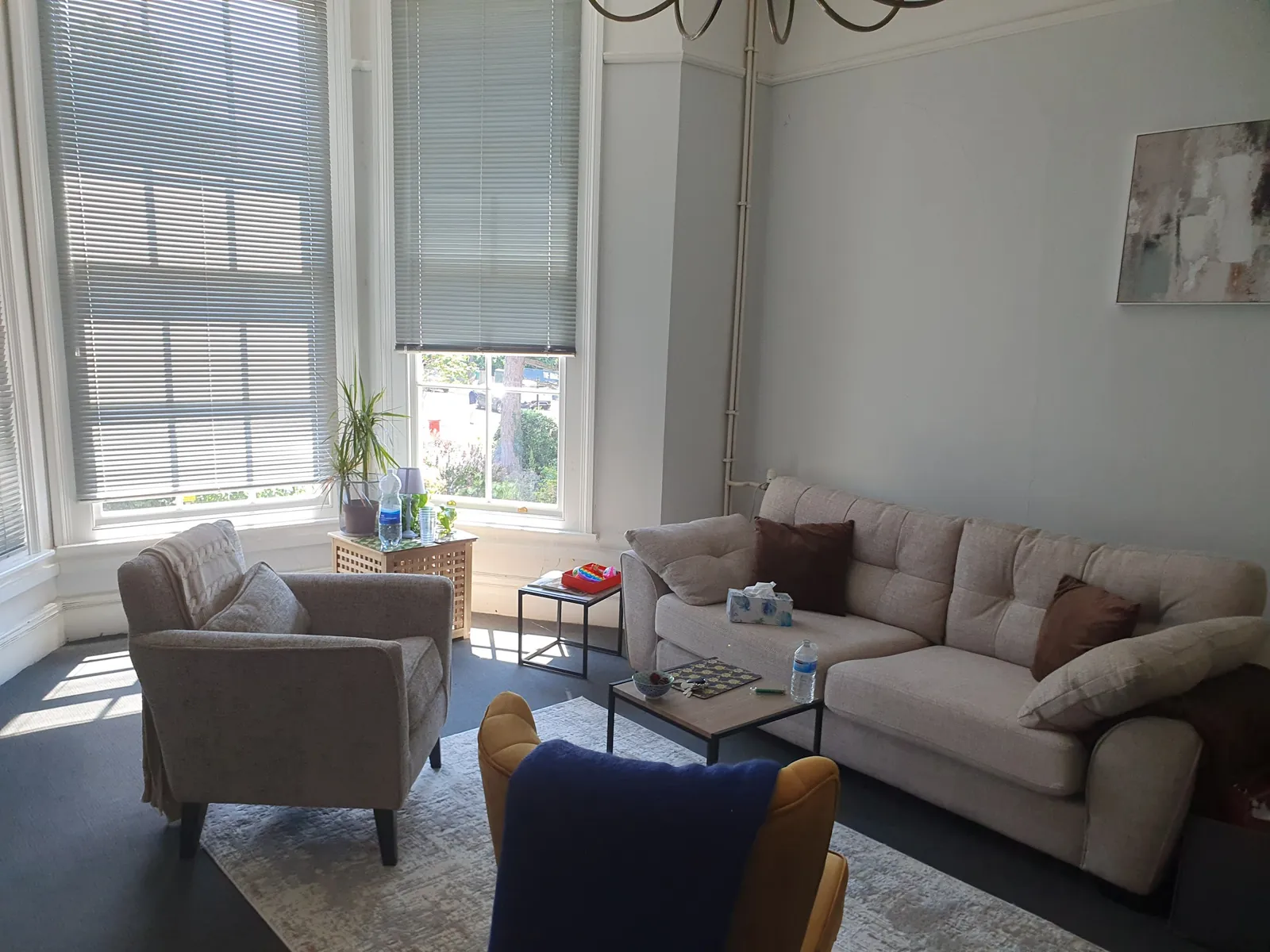
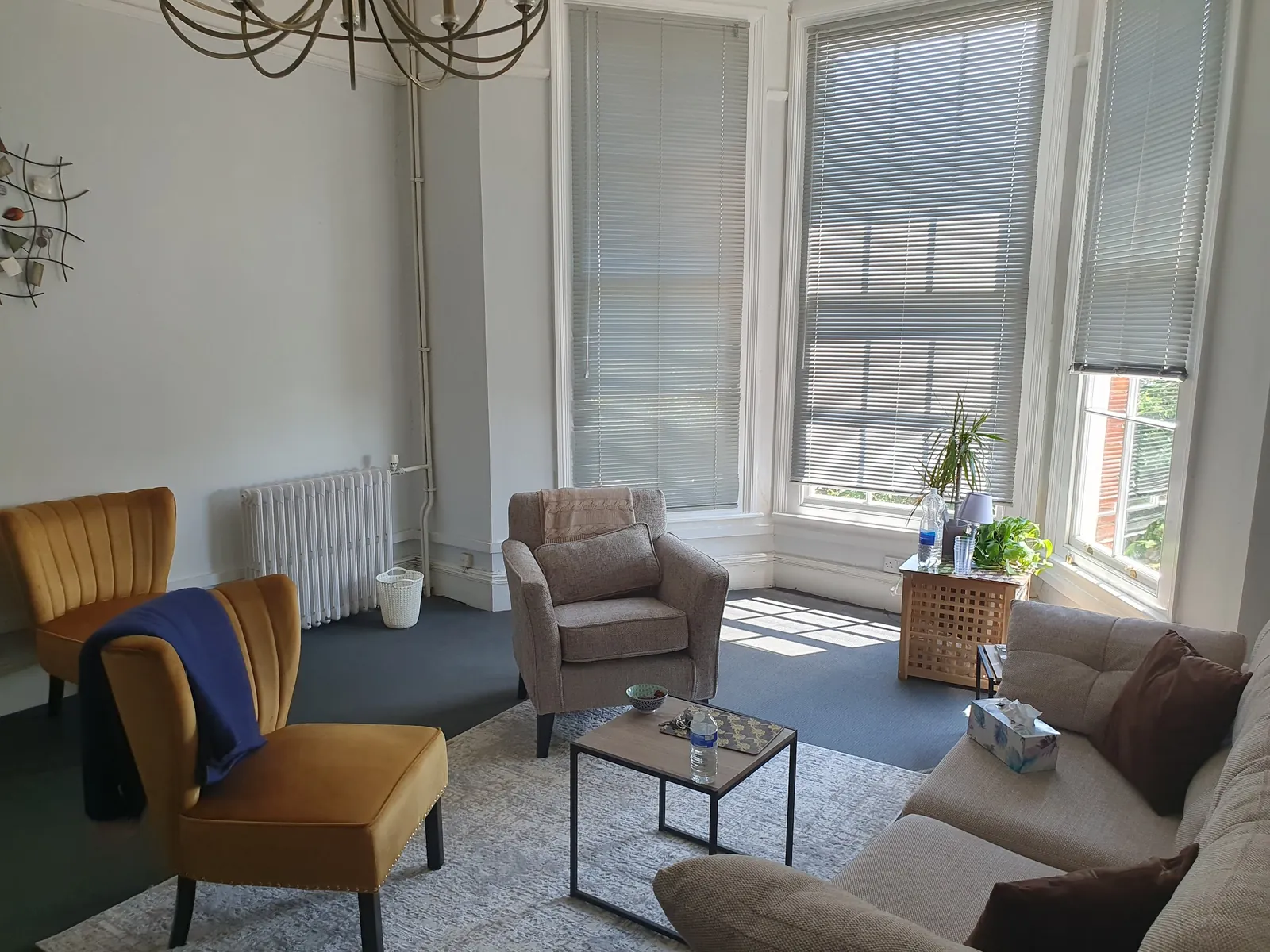
I'm Keeley Taverner, a BACP Accredited psychotherapist with 14 years' experience, working from practices in Marlow and Uxbridge, and online across the UK. I specialise in helping people recover from toxic relationships, narcissistic abuse and coercive control — and the patterns those experiences leave behind: codependency, people-pleasing, the slow erosion of self-trust.
I qualified as a psychotherapist 14 years ago and have worked in mental-health settings for 18 in total. But the reason I do this particular work — recovery from toxic and narcissistic relationships — is more personal than any line on a CV.
How I came to this work
This isn't a profession I picked up from a comfortable distance. I'm British-Jamaican, raised by a single mother on a West London council estate. By my twenties I was a mother of two myself, working a checkout at IKEA and living inside a toxic relationship with my children's father. So when someone sits down with me and tries to work out whether what they're experiencing is "really that bad", I'm not guessing — I've stood where you're standing.
What changed things for me wasn't a single lightbulb moment; it was the slow work of understanding the pattern, leaving it, and rebuilding a life on the other side. I went back to study — a degree at Brunel University, then training at The Metanoia Institute, where I undertook an MSc in Psychotherapy and gained a postgraduate diploma — and turned what I'd lived through into a profession. For more than a decade I also worked inside HM Prison Service, alongside people living with undiagnosed personality disorders. That taught me to take the long view, to stay steady, and not to flinch from the difficult, manipulative or frightening parts of human behaviour.
My own heritage is part of how I practise, too. Questions of class, race and social mobility shaped my life, so I don't treat the "presenting problem" in isolation — I work with the whole person and the whole context, because that's usually where real change lives. Traditional clinical training, a contemporary and direct style, and lived experience underneath it: people tend to come to me when they've already tried everyone else.
BACP Qualifications & Professional Accreditation
My credentials are public and verifiable — which on a Your-Money-Your-Life topic like mental-health care, they should be.
- BACP Accredited Psychotherapist. Accreditation is the higher tier of BACP membership (one step beyond Registered) and means my clinical practice, supervision and ethics have been independently assessed.
- Postgraduate Diploma in Psychotherapy — Metanoia Institute, 2012. I undertook an MSc at The Metanoia Institute, one of the UK's longest-established psychotherapy training schools.
- Certificate in Person-Centred Supervision — BACP, 2015. I supervise other therapists' clinical work as part of my own practice.
- Volunteered in mental-health roles from 2008 — the 18-year figure is total practice time including the four years between volunteering and full qualification.
I work to the BACP Ethical Framework — confidentiality, informed consent, clear contracting, and ongoing clinical supervision are non-negotiable parts of how I practise.
Who I work with
Most people who come to me are doing two things at once: they're trying to understand a relationship that didn't feel right (with a partner, a parent, a boss, sometimes a friend), and they're trying to make sense of what it's done to them. They've often tried other routes first — NHS therapy, coaching, retreats, self-help, sometimes years of it — and still feel stuck. The work I do isn't a quicker version of any of that; it's a different angle, drawn from a specific specialism and a specific kind of experience.
I work in three settings:
- One-to-one psychotherapy — confidential sessions in Marlow, Uxbridge or by secure video. Some people come for a defined piece of work (6–12 sessions); others stay longer.
- Changemakers — my flagship recovery-from-narcissistic-abuse group programme. Capped numbers, paced over months, significantly cheaper per-hour than 1-to-1.
- Public writing & media — the goal is to make the recovery process visible to people who'd otherwise never reach a therapy room. Why Love Hurts, the articles, the social posts, the press interviews — same message, different surfaces.
How I work
My practice is integrative — I draw on several genuine trainings rather than forcing every client into one method. The grid below is the honest list: every modality is something I've trained in formally, not a buzzword. The brief blurbs explain what each one is for, and which I tend to reach for first depending on what's bringing you to therapy.